


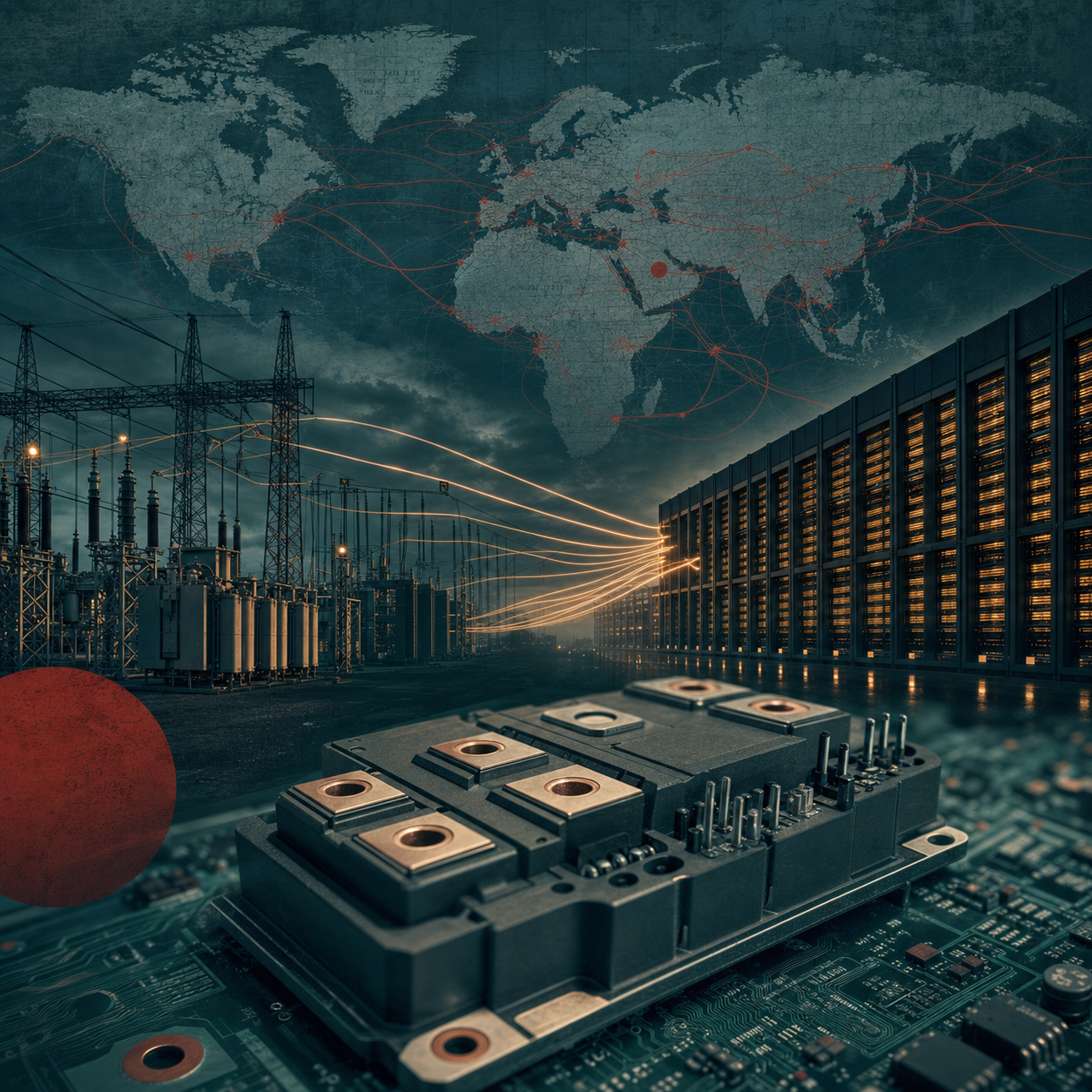
We’ve judged technological progress by faster processors, denser memory, more sophisticated software for decades. Energy was essential but typically treated as a background utility, important but rarely decisive in strategy.
That paradigm is shifting quickly.
The explosive growth of artificial intelligence, hyperscale data centers, advanced semiconductor manufacturing and electrification is putting unprecedented strain on global energy infrastructure. So the talk is moving away from computational performance to a bigger question: can the power ecosystem keep up with digital innovation?
In its latest report, GeoTechNexus examines this metamorphosis, stating that energy has evolved from a simple operational cost to a strategic asset. More importantly, it investigates why power electronics have become one of the crucial enabling technologies for the next-generation digital infrastructure.
The report takes a look beyond processors and AI accelerators to the technologies that work behind the scenes, such as power semiconductors, energy conversion systems and the infrastructure that makes for reliable, efficient and scalable electricity delivery. These technologies are playing an ever-increasing role in determining how fast new computing capacity can be brought online, and how efficient modern digital systems can be.
The report also points to another important dimension – the growing interaction between technology, industrial policy and geopolitics. Manufacturing capacity, critical materials, energy availability and supply-chain resilience are becoming central to the competitiveness of both companies and countries.
The report is more than a description of the current market trends. Instead, it provides a broader strategic context for understanding why energy is becoming one of the defining variables of the high-tech economy, and what that means for semiconductor companies, data-center operators, policymakers and investors.
As the pace of AI adoption quickens and electrification picks up across industries, the ability to efficiently capture, control and convert electrical power may prove to be as important as advances in computing itself.
Readers seeking a deeper analysis of these changing dynamics will find it in the full report, based on industry research and expert insights, and relevant to the future of electronics, semiconductors, power systems and global technology strategy.
