


NoMIS Power Corporation has joined a U.S. Department of Energy-backed consortium developing next-generation high-voltage DC transmission technologies under the Advanced Research Projects Agency–Energy (ARPA-E) DC-GRIDS program. The three-year, $2.5 million project is led by Michigan State University and focuses on developing silicon carbide-based Neutral Point Clamped Power Electronics Building Blocks (NPC-PEBBs) for modular high-voltage direct current (HVDC) converters.
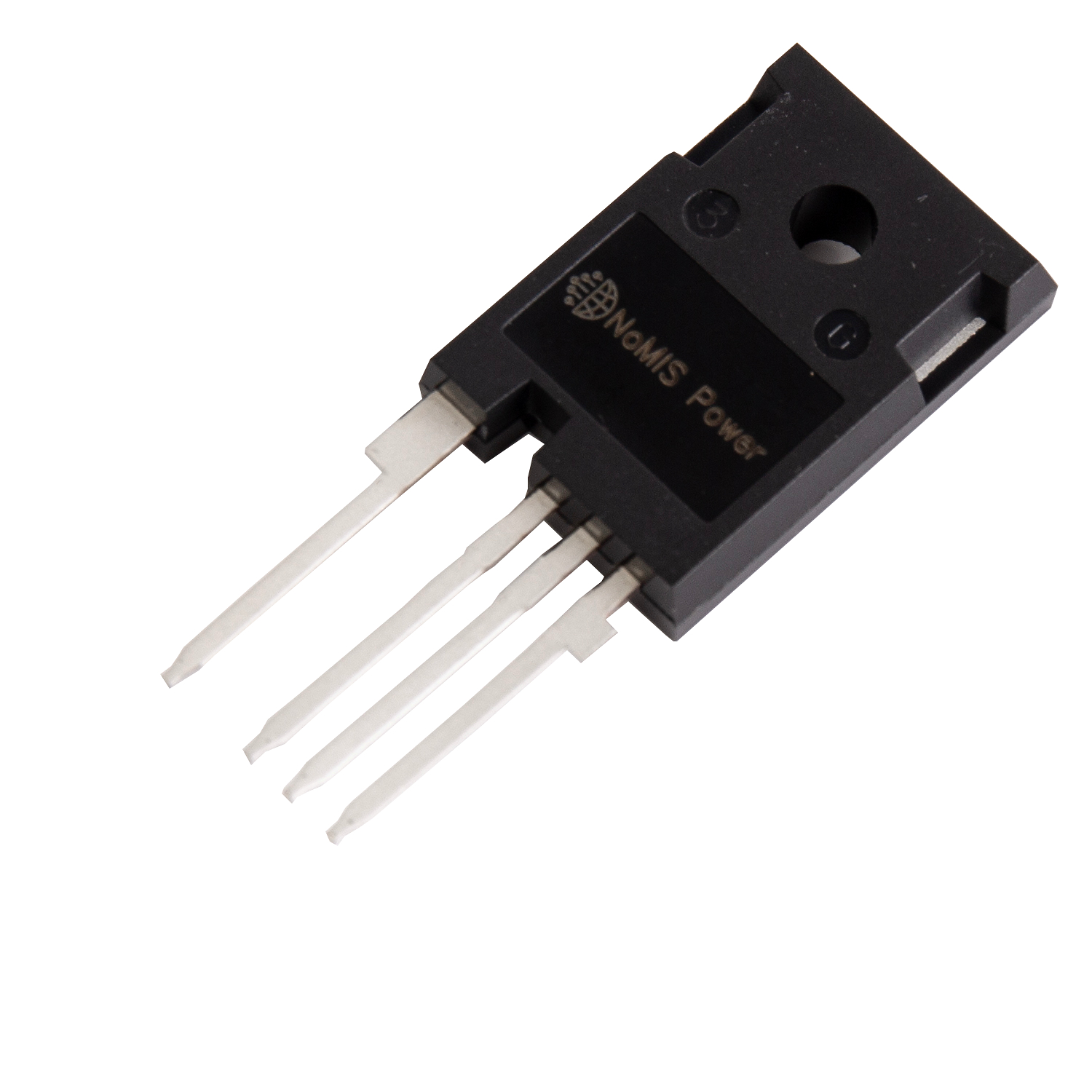
The project will leverage NoMIS Power’s portfolio of 3.3 kV silicon carbide (SiC) MOSFETs, including the company’s upcoming 25 mΩ device, to support the development of 6.6 kV / 2.5 kA NPC-PEBB submodules for multiport multiterminal HVDC (MT-HVDC) systems. According to the consortium, the technology is intended to improve efficiency, power density, reliability, and fault protection in future HVDC infrastructure.
The ARPA-E DC-GRIDS initiative focuses on accelerating the development of advanced DC power conversion technologies that expand transmission capacity for applications such as electrification, offshore wind integration, interregional grid connections, and rapidly growing data center power demand.
The consortium includes several industry and research organizations, such as the Electric Power Research Institute (EPRI), OPAL-RT Technologies, GE Grid Solutions, the National Renewable Energy Laboratory (NREL), Salt River Project, and Minnesota Power.
The NPC-PEBB architecture is designed as a vendor-agnostic, plug-and-play submodule for modular HVDC converters. Compared with conventional silicon IGBT-based half-bridge submodules, the SiC-based design offers a three-level 6.6 kV output, full DC fault current blocking capability, and a 60% reduction in capacitor size through advanced multilevel modulation techniques.
NoMIS stated that its upcoming 25 mΩ 3.3 kV SiC MOSFET is particularly well-suited for HVDC submodule applications because its low on-resistance can significantly reduce conduction losses, while improving converter efficiency and thermal performance at high operating currents.
As part of the project, NoMIS Power will lead SiC device-level packaging activities, electrical testing, screening, and performance characterization for the power devices and modules integrated into the NPC-PEBB assemblies. The work will be carried out at the company’s facility within the Albany Nanotech Complex.
Beyond the consortium, NoMIS confirmed that its 3.3 kV SiC MOSFETs and power modules will also be available to other DC-GRIDS participants and external medium- and high-voltage power electronics developers seeking to transition from legacy IGBT-based systems to silicon carbide technologies.
